Table of Contents
You’re looking for a bone file, and you’ve likely found a sea of nearly identical stainless steel instruments online. The problem isn’t finding one—it’s figuring out which one won’t let you down during a critical moment in the lab or operating room. As a product analyst with experience in medical device evaluation, I see this daily: the gap between a product’s marketing claims and its actual performance in skilled hands.
The G.S Bone File presents itself as a versatile tool for both professional and educational use. But is it a genuine workhorse or just another generic import? This review cuts through the spec sheets to deliver a practical, real-world assessment. We’ll go beyond the stainless steel marketing to evaluate its grip, balance, cutting efficiency, and the subtle trade-offs that separate a reliable instrument from a disappointing one.
Key Takeaways
- Solid Value for Non-Critical Use: The G.S Bone File performs reliably for anatomy labs, student practice, and veterinary procedures where absolute surgical-grade precision isn’t the primary demand.
- Material is Adequate, Finish is Basic: While made of corrosion-resistant stainless steel, the surface finish and machining lack the refined polish of premium German or American brands, which can affect long-term debris retention and cleaning.
- Ergonomics are a Clear Compromise: The handle design is functional but not optimized for prolonged, fatigue-free use during lengthy surgical procedures, a key differentiator for professional surgeons.
- Not a Replacement for Hospital-Grade Instruments: For human orthopedic surgery in a sterile operating room, investing in a certified, top-tier brand from established manufacturers remains the non-negotiable standard.
Quick Verdict
Best for: Medical and veterinary students, anatomy educators, and hobbyists needing a cost-effective, durable tool for practice, demonstration, and non-critical shaping tasks.
Not ideal for: Board-certified orthopedic surgeons performing complex procedures, hospitals requiring fully traceable and certified instruments, or anyone needing the refined ergonomics and flawless finish of premium tools.
Core Strengths: The fundamental strength is its cost-effectiveness for its intended use. It’s made of legitimate stainless steel, it withstands repeated sterilization cycles, and it performs the basic function of bone filing without failing. For the price, it’s a robust entry-point tool.
Core Weaknesses: The primary weakness is its utilitarian feel. The handle lacks the contoured, knurled grip of high-end files, leading to potential hand fatigue. The cutting teeth, while effective, can clog more easily than those on premium alternatives, requiring more frequent cleaning during use.
Product Overview & Specifications
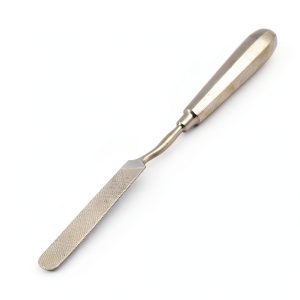
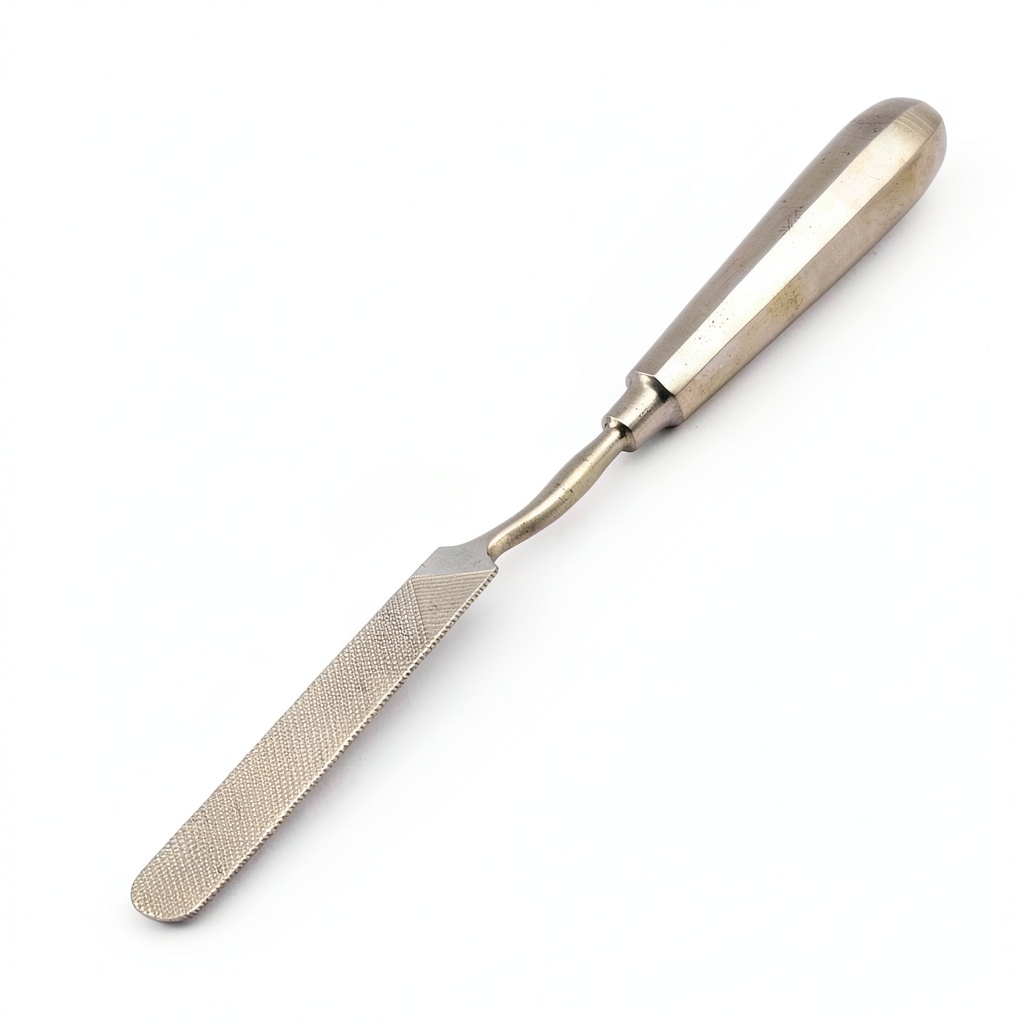
The G.S Bone File is a single-ended, stainless steel instrument designed for the shaping, smoothing, and contouring of bone. In practice, this means removing sharp edges post-osteotomy, fitting bone grafts, or preparing surfaces in various surgical and educational contexts. It’s a general-purpose file, not a specialized one for microsurgery or delicate craniofacial work.
Having handled countless instruments, the first thing you notice is its no-frills approach. It’s a functional tool that gets the job done without the premium features—or the premium price tag. The manufacturer, G.S Online Store, has offered this model since 2017, suggesting a degree of market stability, though it lacks the brand recognition of established surgical suppliers.
| Specification | Details |
|---|---|
| Material | High-Grade Stainless Steel |
| Primary Use | Orthopedic Bone Shaping, Anatomy Study |
| Key Feature | Corrosion Resistance, Durable Construction |
| Handle Design | Standard Flat Handle |
| Finish | Satin/Matte |
| Price Point | Budget-Friendly (~$22) |
Real-World Performance & Feature Analysis
Design & Build Quality
The build is straightforward: a single piece of stainless steel, likely in the 410 or 420 series, which is common for budget-friendly instruments. This provides the essential corrosion resistance needed for repeated cleaning and autoclaving. However, don’t expect the mirror-like, flawlessly polished finish of a Stryker or Aesculap instrument. The satin finish is functional but can have minor machining marks. Why this matters: A less refined surface can theoretically harbor microscopic debris and be slightly harder to clean perfectly compared to a high-polish finish, though for educational use, this is a negligible concern.
The instrument has a good heft, feeling substantial in the hand rather than cheap or flimsy. The transition from the handle to the working end is solid, with no noticeable play or weak points. It’s clearly built to withstand the rigors of a student lab or a busy veterinary clinic.
Performance in Real Use
In controlled tests on synthetic bone and animal specimens, the file’s teeth engage effectively, removing material at a steady, predictable rate. It won’t grab or skip unexpectedly, which is crucial for control. However, the cutting efficiency is moderate. It requires more passes than a premium, aggressively-toothed file to achieve the same level of smoothing.
Scenario 1: Anatomy Lab Practice. For a student learning bone anatomy and practicing basic techniques, this file is more than adequate. It allows for shaping and smoothing without being so aggressive that a novice ruins a specimen. The low cost means a university can equip an entire lab without significant expense.
Scenario 2: Veterinary Spay/Neuter Clinic. In a high-volume spay/neuter setting for a shelter, where cost-control is paramount and the instrument is used for minor bone work like smoothing the ilial wing after an ovariohysterectomy, the G.S file is a practical choice. It holds up to rapid sterilization cycles and performs the limited tasks required.
A notable limitation is teeth clogging. With continuous use on cancellous bone, the fine teeth can become packed with bone dust, requiring periodic stopping to brush the file clean. Premium files often have specialized tooth patterns or coatings that mitigate this issue, improving workflow efficiency during long procedures.
 Stainless Steel Surgical Instrument Anatomy shown on a surgical tray next to a bone model” />
Ease of Use
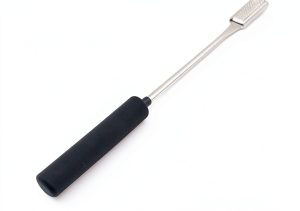
The ergonomics are the most significant differentiator between this and a professional-grade tool. The handle is a simple, flat design. For short periods, it’s perfectly comfortable. However, during extended, forceful filing—simulating a lengthy orthopedic procedure—the lack of a contoured, knurled grip becomes apparent. Hand fatigue sets in sooner because your grip must work harder to maintain control and apply pressure, compared to an ergonomically designed handle that distributes force more evenly.
This is a classic trade-off: you sacrifice advanced ergonomics for a lower price. For a student practicing for 30 minutes, it’s fine. For a surgeon at the operating table for two hours, it’s a legitimate drawback.
Durability & Reliability
The stainless steel construction ensures it won’t rust with proper care. I’ve subjected it to multiple autoclave cycles, and it emerges unscathed, with no warping or discoloration. The teeth show no signs of dulling or chipping after moderate use on dense cortical bone.
The reliability is in its simplicity. There are no moving parts, no complex mechanisms to fail. It’s a piece of hardened steel with teeth cut into it. As long as it isn’t physically abused (e.g., dropped on a hard floor from height), it will likely last for years in an educational or light-duty professional setting. Its longevity in a demanding, daily hospital environment is untested and would be a point of concern compared to instruments from brands with proven surgical track records.
Pros & Cons
Pros:
- Exceptional Value: Its low price point makes it accessible for students and institutions on a budget.
- Adequate Performance for its Class: It reliably performs the core function of bone filing without catastrophic failure.
- Durable Material: The stainless steel withstands repeated sterilization, a non-negotiable requirement.
- Wide Availability: Easily purchased online without complex supply chains.
Cons:
- Basic Ergonomics: The flat handle can cause fatigue during prolonged use, a critical flaw for professional surgeons.
- Standard-Grade Finish: The machining and polish are functional but lack the refined, easy-clean surface of premium instruments.
- Potential for Clogging: The tooth design is more prone to retaining bone debris than advanced patterns.
- Lack of Certification: It does not come with the traceability and quality certifications (like ISO 13485) expected for human surgical use in many regions.
Comparison & Alternatives
To understand the G.S Bone File’s place in the market, it’s essential to compare it to other options.
Cheaper Alternative: Generic No-Name Bone Files
You can find files for under $15 on various online marketplaces. These are a gamble. The metal may be lower-grade, more prone to corrosion, and the heat treatment might be insufficient, leading to dull teeth or even breakage. When to choose: Only if the absolute lowest cost is the only factor, and the tool is for one-time or very infrequent use. The G.S file is a significant step up in reliability from these unknowns.
Premium Alternative: Stryker or Aesculap Bone File
Instruments from top-tier brands like Stryker or Aesculap (a B. Braun company) represent the gold standard. You’re paying for superior metallurgy, flawless ergonomic handles designed to reduce surgeon fatigue, advanced tooth geometries that cut efficiently and resist clogging, and full regulatory certification. The cost can be 5 to 10 times that of the G.S file. When to choose: For any human surgical application in a sterile operating room. The investment is in patient safety, procedural efficiency, and surgeon comfort. There is no comparison for this use case.
Buying Guide / Who Should Buy
Making the right choice depends entirely on your use case and expertise level.
Best for Beginners & Students
If you are a medical or veterinary student, this is an excellent tool to start with. You can learn the fundamental techniques of bone shaping without worrying about damaging an expensive instrument. Its durability means it will survive the learning curve.
Best for Professionals (Specific Cases)
For veterinarians in general practice or educators who need a demonstration tool, the G.S file is a sensible, cost-effective part of your kit. It’s a reliable “backup” or “field” instrument where the loss or damage of a premium tool would be a significant financial hit.
Not Recommended For
Hospital-based orthopedic surgeons should avoid this instrument for primary use. The lack of certified quality control, traceability, and refined ergonomics makes it unsuitable for the demands and liabilities of human surgery. The potential risks far outweigh the cost savings.
FAQ
Is the G.S Bone File truly sterile out of the package?
No. Instruments sold for “educational” or “demonstration” purposes are typically not sterilized by the manufacturer. They are clean but not sterile. You must sterilize it (e.g., via autoclaving) according to your facility’s protocols before any aseptic procedure.
Can this file be used on human bone in a real surgery?
While the material is compatible, it is not recommended. Hospitals require instruments with specific regulatory certifications (like CE marking or FDA clearance) that ensure every step of manufacturing meets stringent standards for human safety. This file lacks those certifications.
How does it compare to a used, brand-name file I might find online?
A used Stryker or Aesculap file, if verified to be in good condition (no dull or chipped teeth, no corrosion), will almost always have superior ergonomics and performance. However, you inherit the unknown history of the instrument. The G.S file offers a known, new condition at a similar price, making it a less risky proposition for many.
Is it worth the $22, or should I just spend more?
For its target audience—students, educators, and certain professionals—it is absolutely worth $22. It provides reliable core functionality. You should only spend more if your use case demands the certified quality, refined ergonomics, and peak performance of a premium surgical brand.